Godolphin House & Gardens
| Contact | Mrs Joanne Schofield |
| Enquiries | 01736 763194 |
| Fax | 01736 763689 |
| godolphin@nationaltrust.org.uk | |
| Website | www.nationaltrust.org.uk/godolphin |
| Very early gardens, the side garden dates from c.1300 and underwent a major revival in 2003. Compartmented 4.5 acre, nine square garden surrounded by a raised walk. Walled King's garden c.1500 adjacent to state apartments. | |
| Open | House: Closed for refurbishment. "Hard hat" tours available on a regular basis during the refurbishment Garden: 13th Mar - 31st Oct.Sat to Wed 10.00 - 17:00 Estate: Open all year |
| Admission | House & Gardens Adults: £4.00, Children £2.00 Gardens only Adults: £3.00, Children £1.50 Free Admission to the Estate |
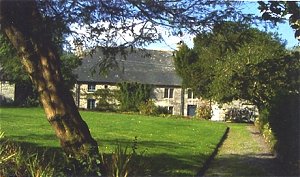
The house is 5 miles north-west of Helston, between Townshend and Godolphin Cross not far from St Michaels Mount in a quiet and remote part of ancient Cornwall. The House at Godolphin is Grade I Listed and is one of Cornwall's most architecturally important houses that is built in a very romantic and quiet setting. Hidden in ancient woodlands, remote yet only 20 minutes from Penzance, Godolphin provides a wonderful day out.
The original Castle was demolished c.1475 and along with large parts of the early gardens which were swept away. A new house was built using the increasing family wealth. The Godolphins, who made their wealth from the local tin and copper mining industry centred on Godolphin Hill which lay within the bounds of the Godolphin family estate, were a successful family who over the generations built and improved Godolphin House.
And it is from 1475 that the earliest parts of the current house date. By the mid-16th century the house consisted of three ranges of buildings with the courtyard closed off by a wall on the north side. Sir William Godolphin, made some alterations to the house and further work was carried out at the end of the 16th century, including the stables (Elizabethan c.1585) by Sir Francis Godolphin then Governor of the Scilly Isles.
The present north range was probably added in the 1630s by his son William to replace an earlier wall which closed the 4th side a courtyard formed from 3 ranges. Within the next few years Godolphin was at it grandest and by 1689 Godolphin House contained around 100 rooms.
Sidney Godolphin, William's grandson was Queen Ann's Lord Treasurer between 1702 - 10 and was responsible for financing the 1st. Duke of Marlborough's Spanish Wars of Succession and was granted an Earldom (1706).
His son the 2nd Earl of Godolphin married Henrietta Churchill daughter of the 1st Duke of Marlborough. Their daughter Lady Mary Godolphin married Thomas Osborne 4th Duke of Leeds in 1740. Mary inherited Godolphin and the estate passed to the Dukes of Leeds.
In 1805 a considerable part of the building was pulled down, including the 16th century hall, and Godolphin became simply a farmhouse. Godolphin remained with the Dukes of Leeds until the 11th Duke sold the house in 1929. The Schofield family bought the house 7 years later and were successful in reacquiring some of the original contents of the house. In 2000, 555 acres of the Estate were acquired by the National Trust and more recently the house & gardens. The National Trust have created many beautiful woodland and hill walks. There are 400 recorded archaeological features ranging from Bronze Age enclosures to 19th Century mine buildings.
This very early garden was laid out sometime around 1300 and was of formal style. In the 1500s a square garden (4.5 acres) was created in the form of nine compartments with a raised walk surrounding it. Six new compartments were added to three compartments from the earlier garden. Within each compartment were different features such as the bowling green and the orchard. About the same time the walled King's Garden next to the state apartments was added..
There were two large rectangular fish ponds created, used for the breeding of Carp, fed from springs at the top of the garden. Water from these springs also fed a waterway and formal water features in the gardens. During the 19th century much of the garden was lost when the land was returned to farmland.
Godolphin House & Gardens
Godlophin Cross
Helston
Cornwall
TR13 9RE